Studio Visit Gysbert Zylstra
Gysbert Zylstra is a multimedia artist from Friesland, North of the Netherlands. I called him to talk about his upcoming solo show, experimenting with tape, and what it’s like using his own name for the first time.
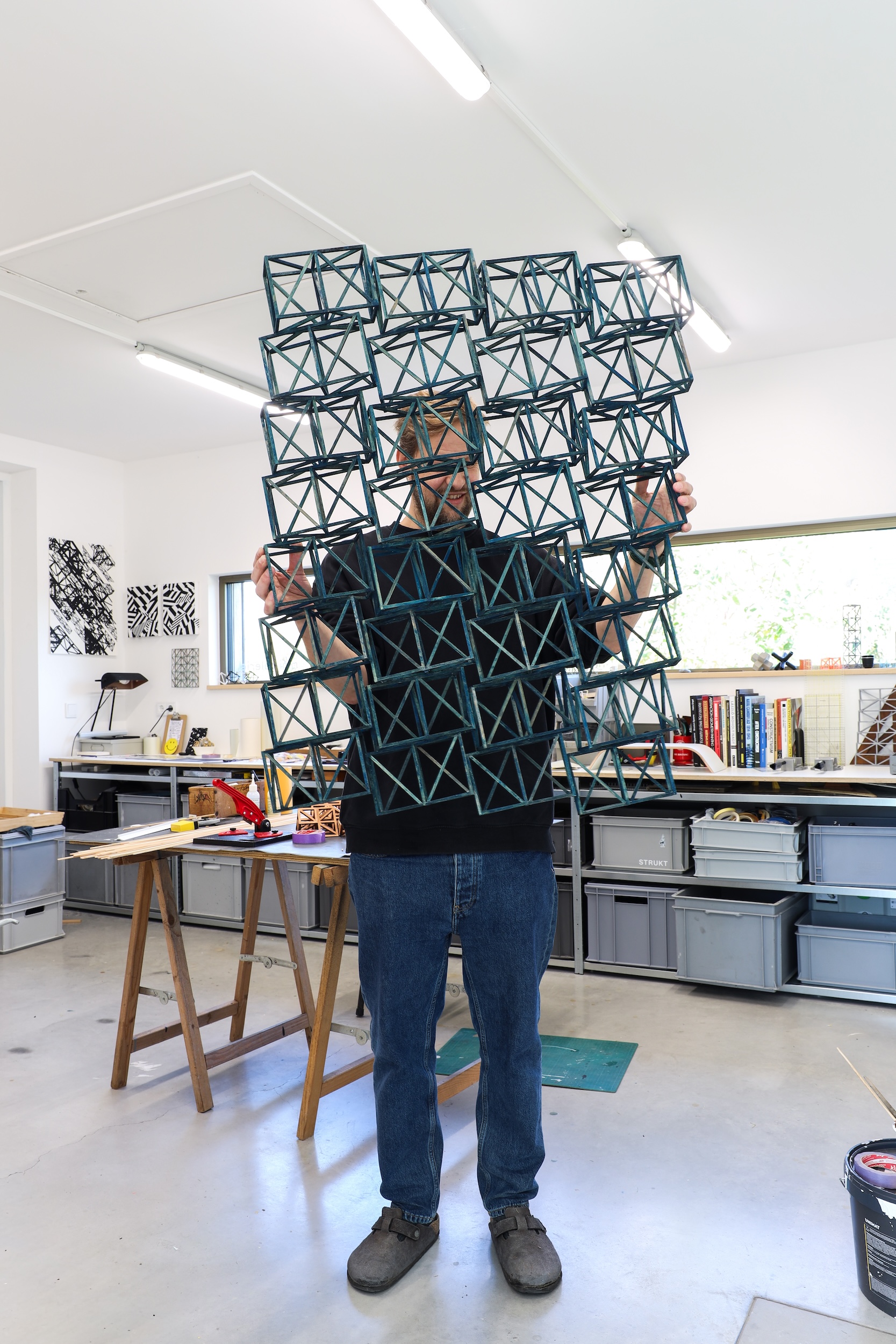
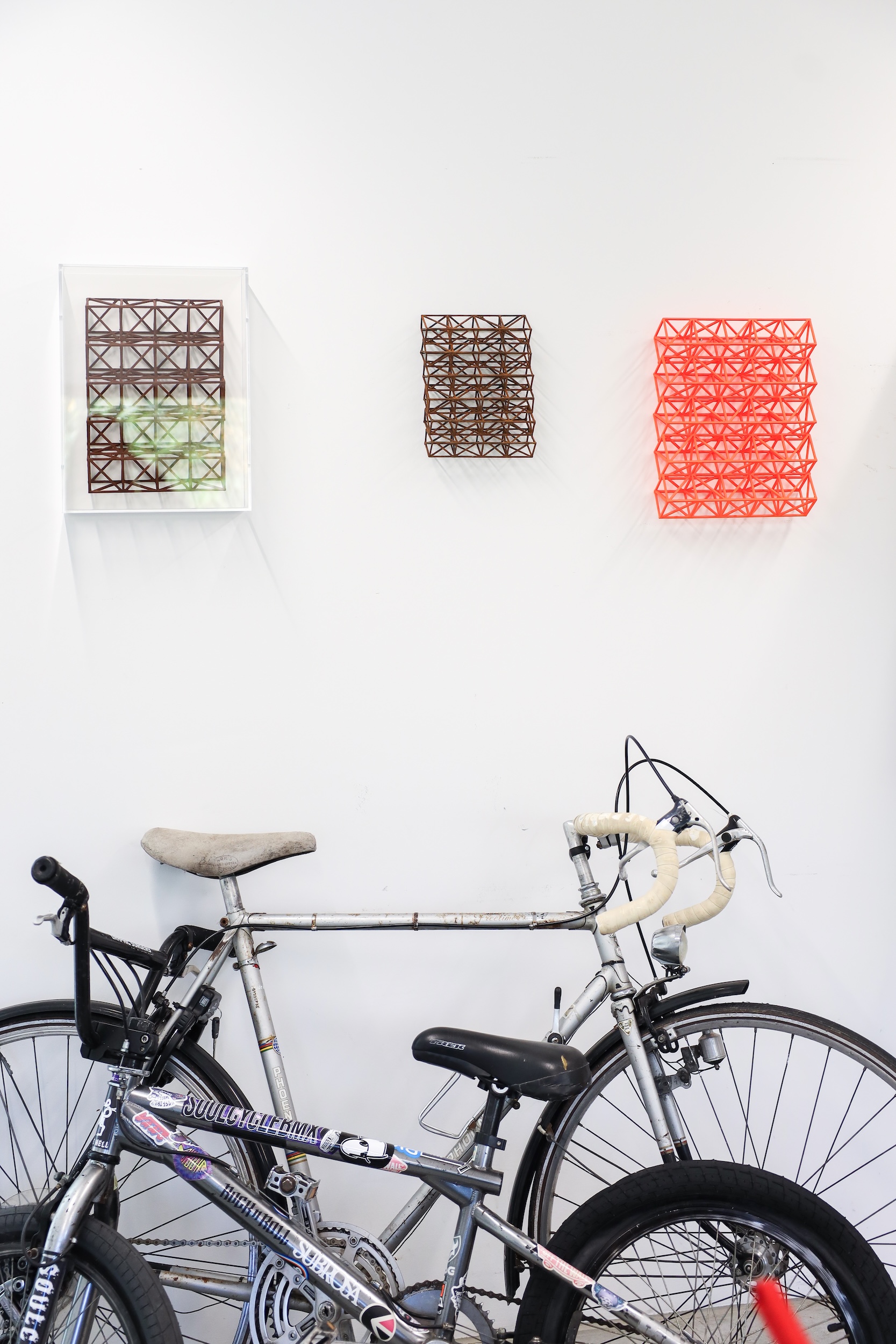
Zylstra is in his studio, an extension of the home he built in Almere, together with Mini Galerie’s owner, Julia van der Meer. “It’s quite useful living where the show will be. I can already test out how the work looks.” He walks a few steps from his studio into the open gallery space, where a few wall sculptures are already hanging up.
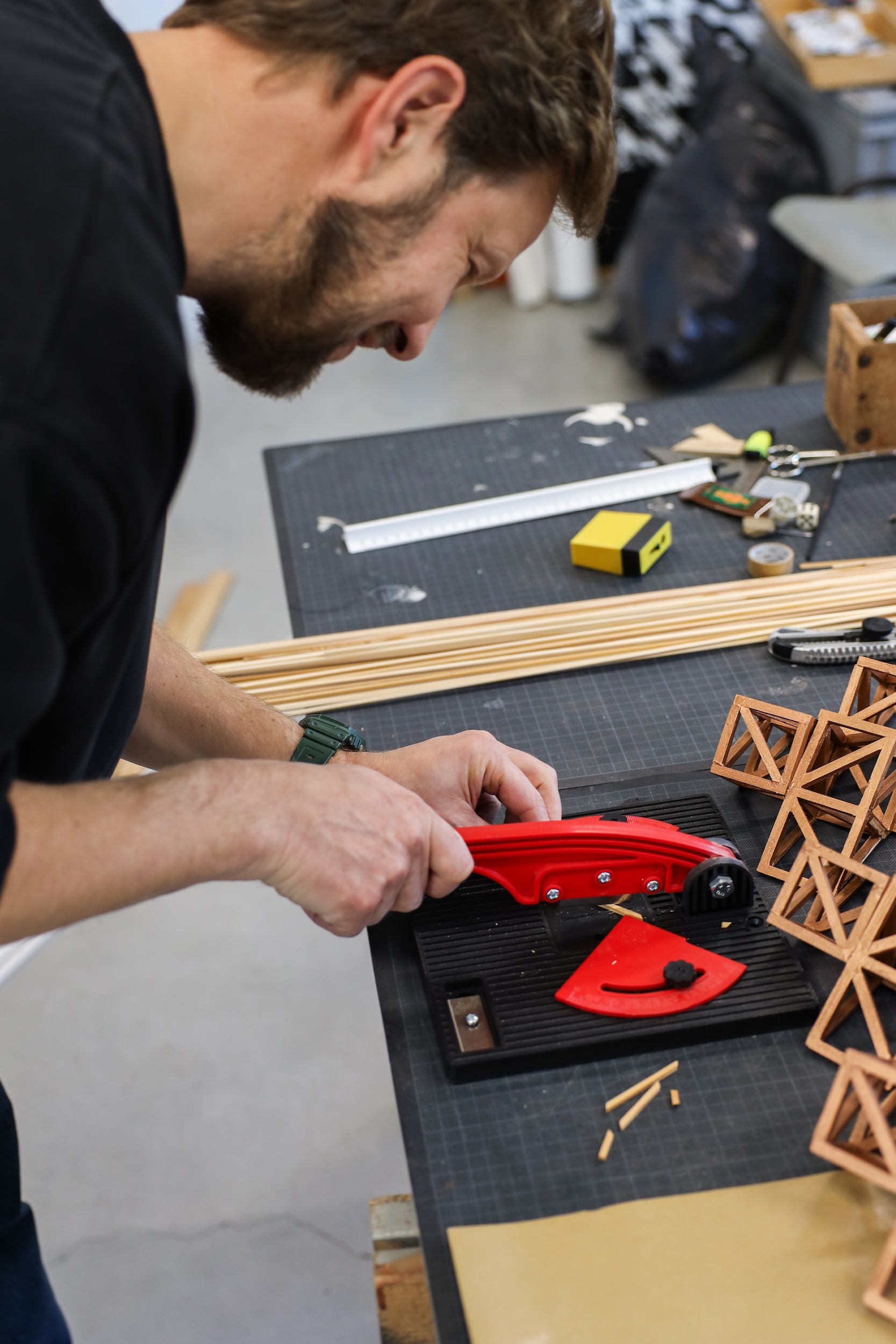
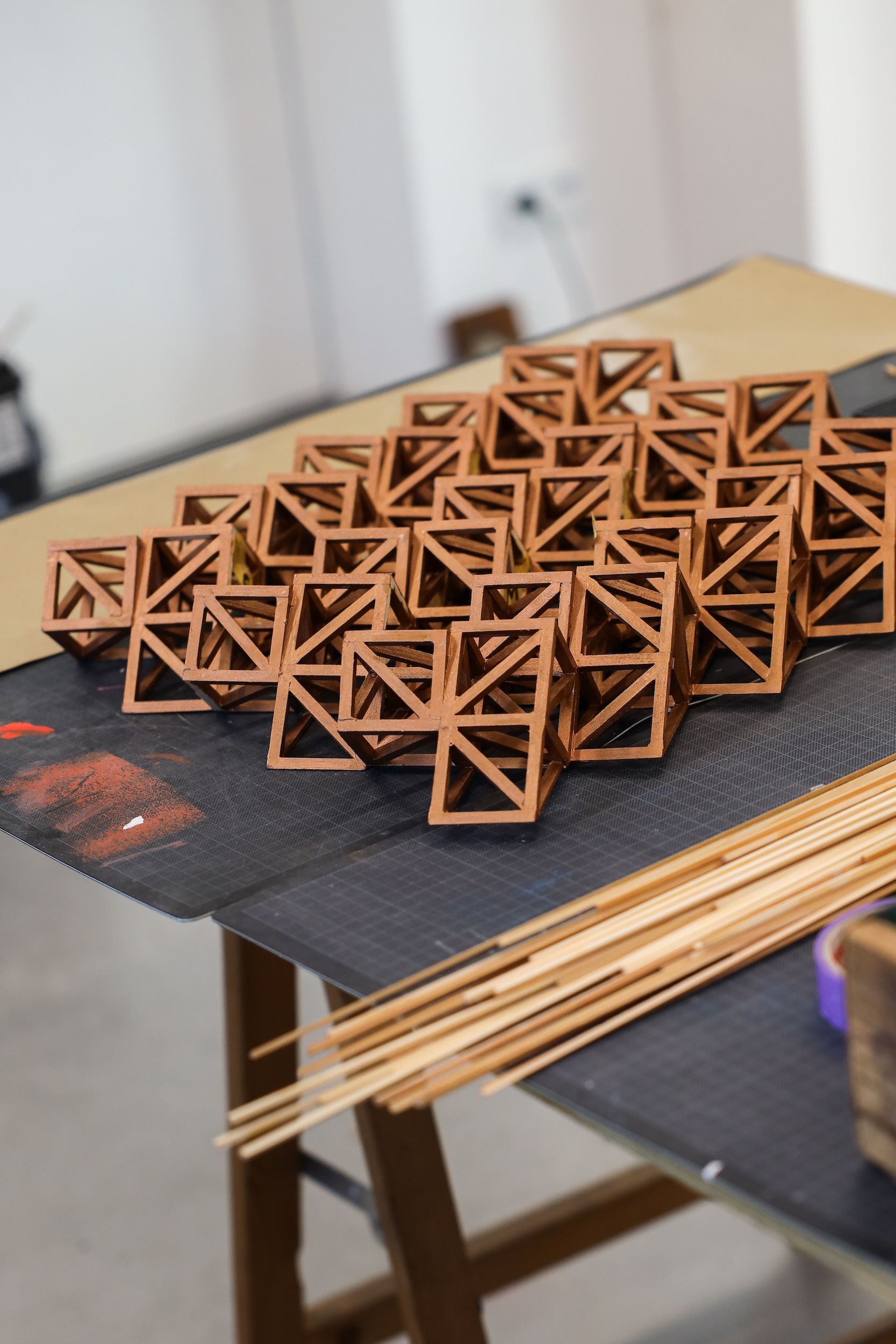
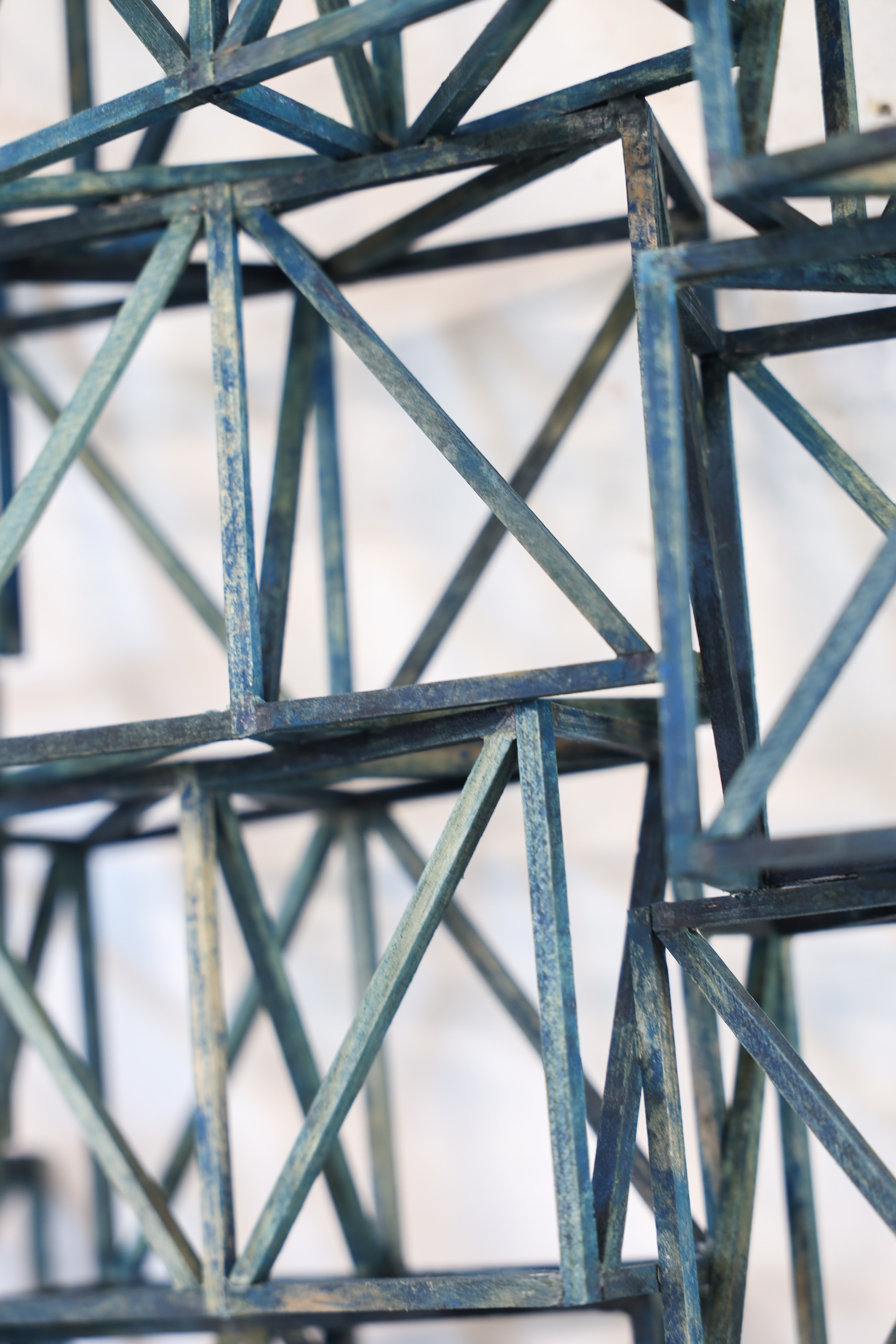
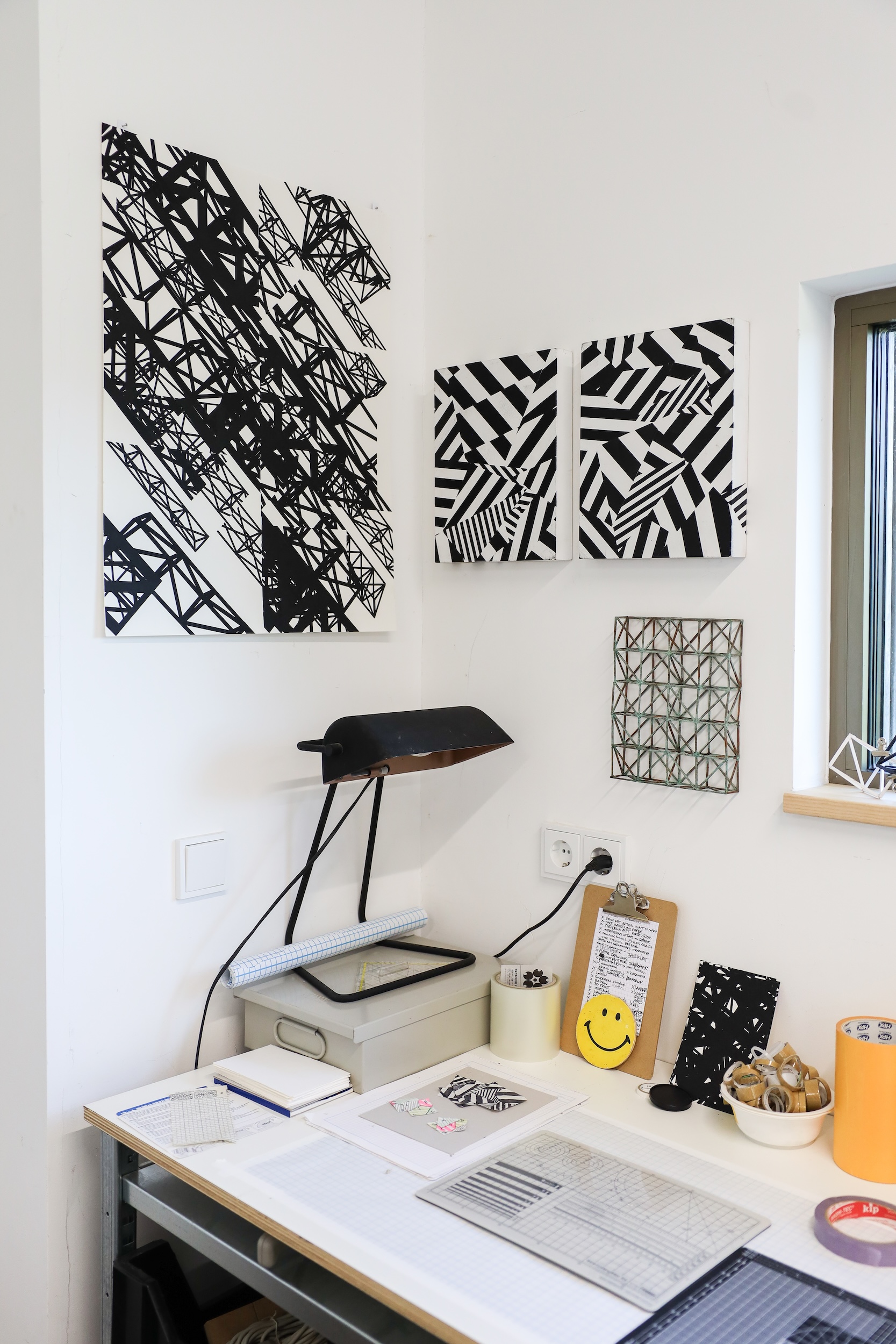
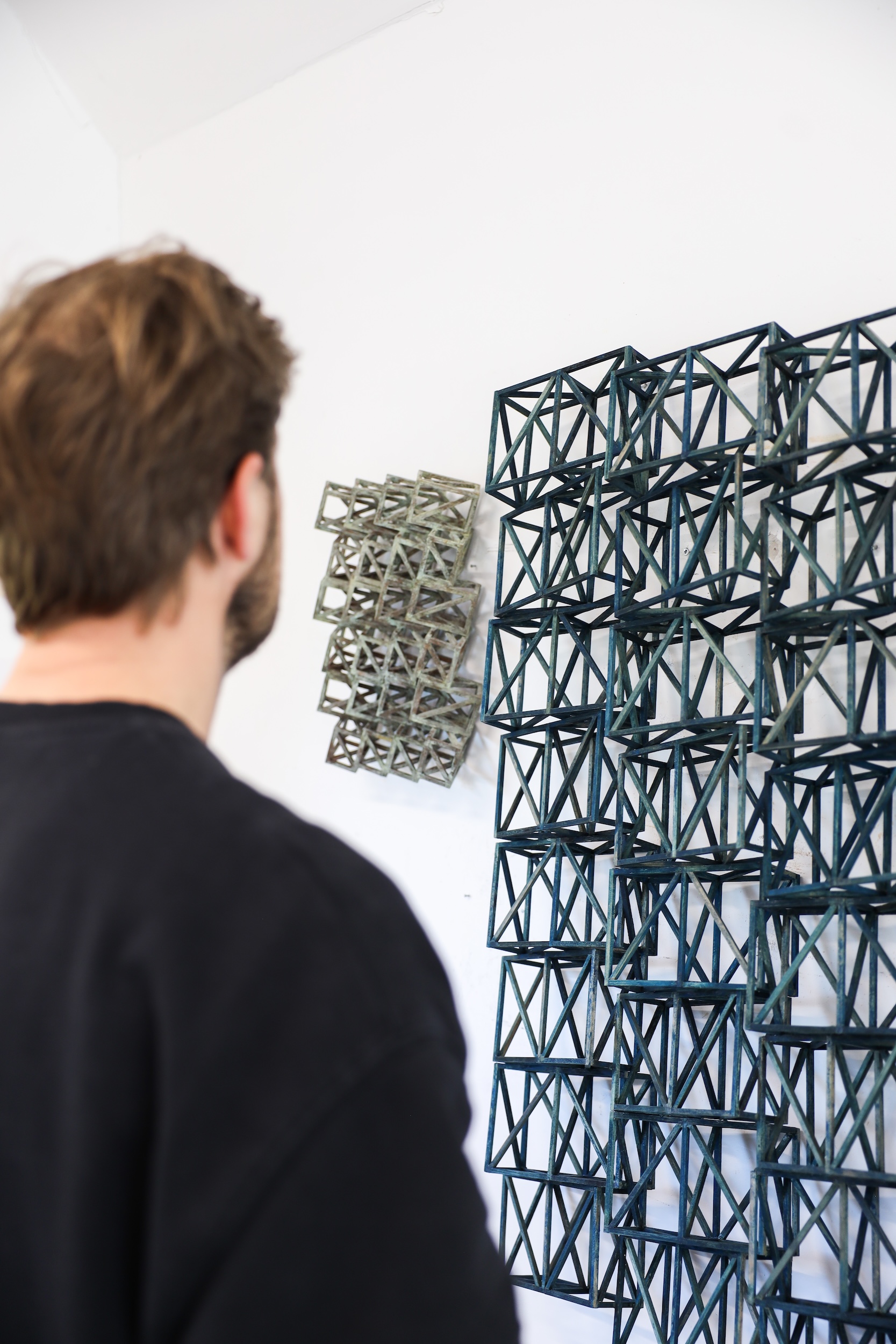
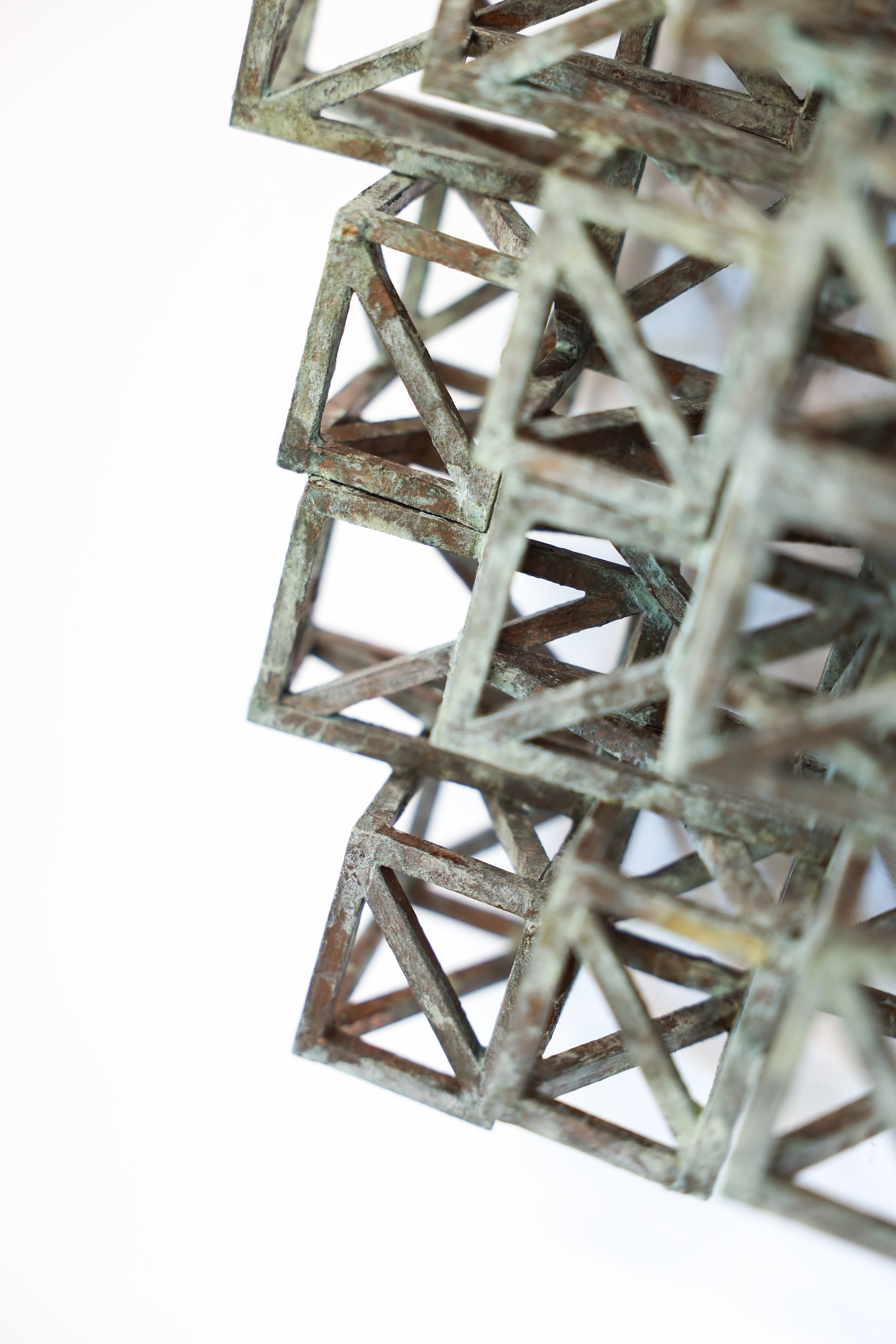
He brings the camera closer to the works: meticulously crafted 3-D structures made of wood that make you feel like you are parkouring in an abandoned construction zone. The wood is deceptive: It feels metallic, and its surface is weathered and speckled in a beautiful blue-grey rust. Using copper paint and cleaning vinegar, oxidation occurs in a matter of minutes.
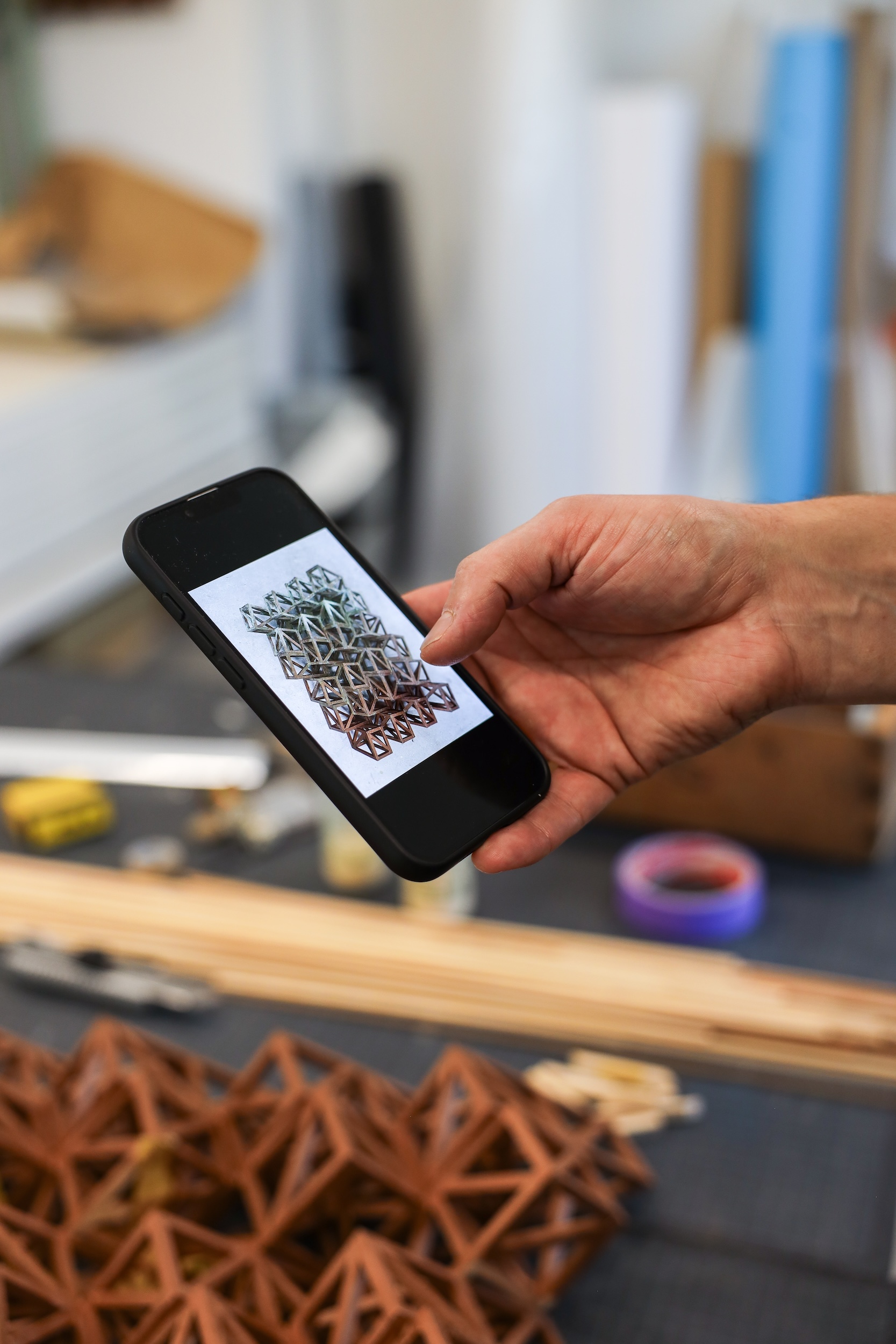
Thin sticks of pine wood that will eventually become another sculpture are on the studio floor. It’s new wood from the building supply store, but Zylstra’s ability to mimic erosion brings depth and maturity to the surface. “I love old wood, it has more character than something brand new.”
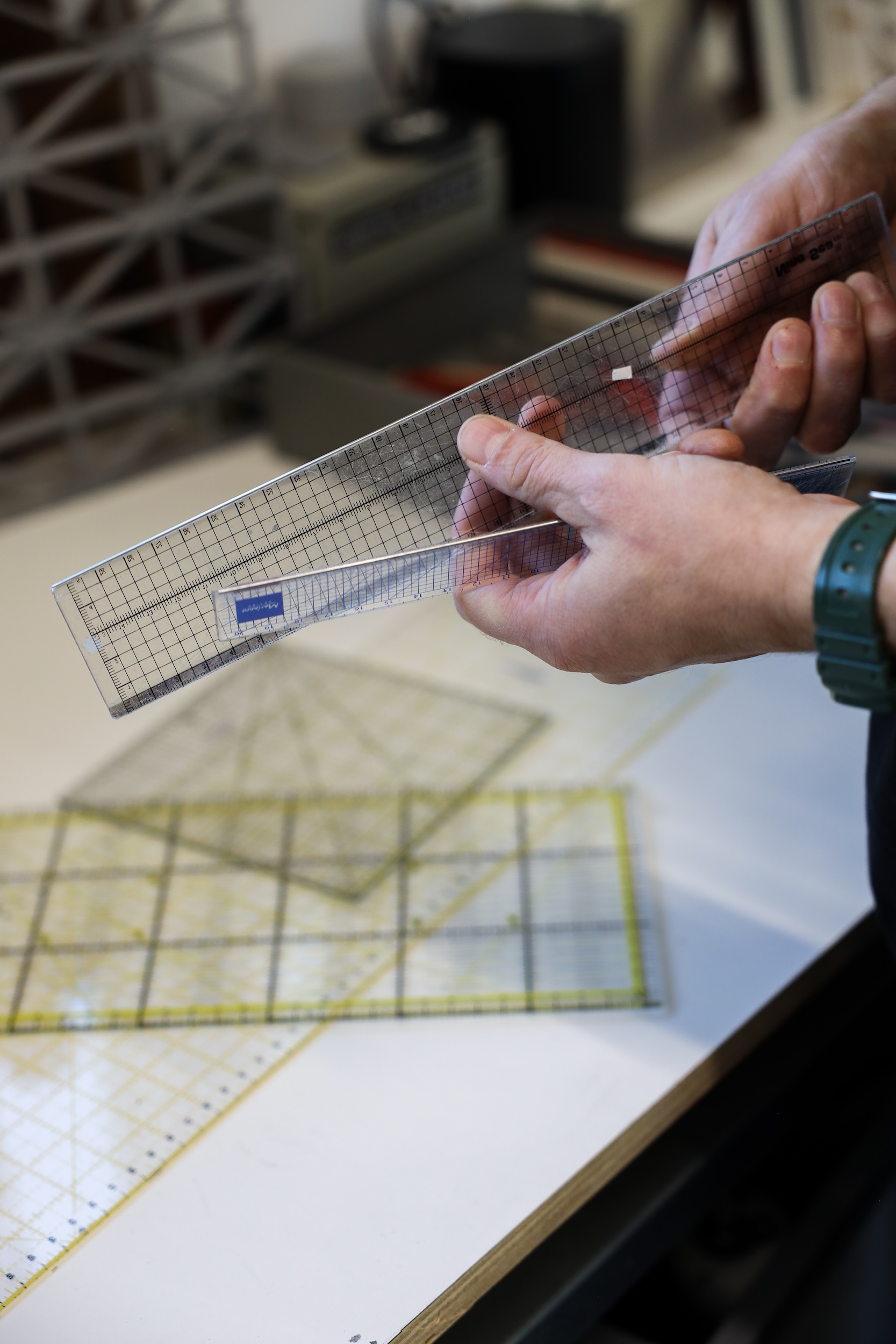
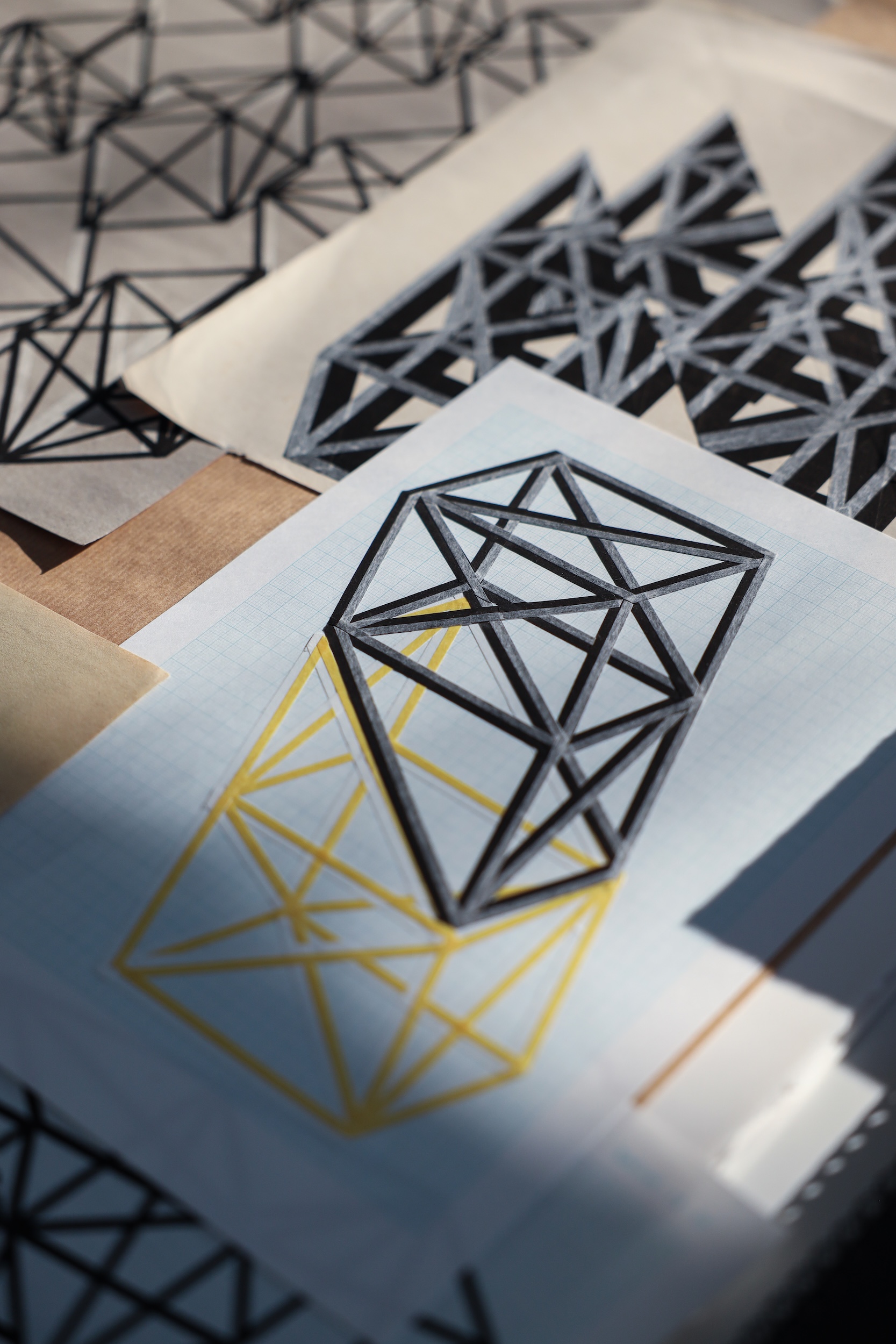
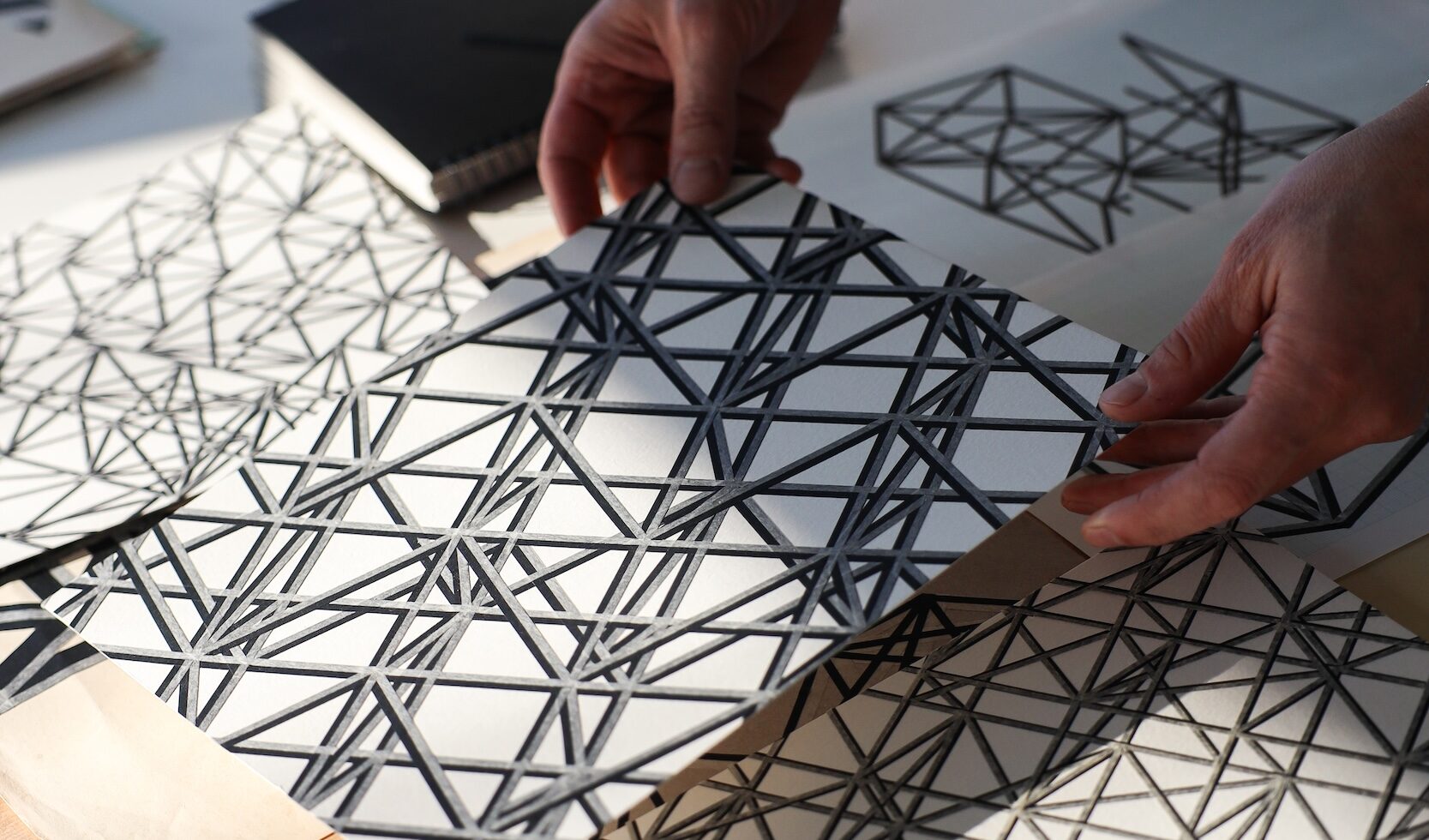
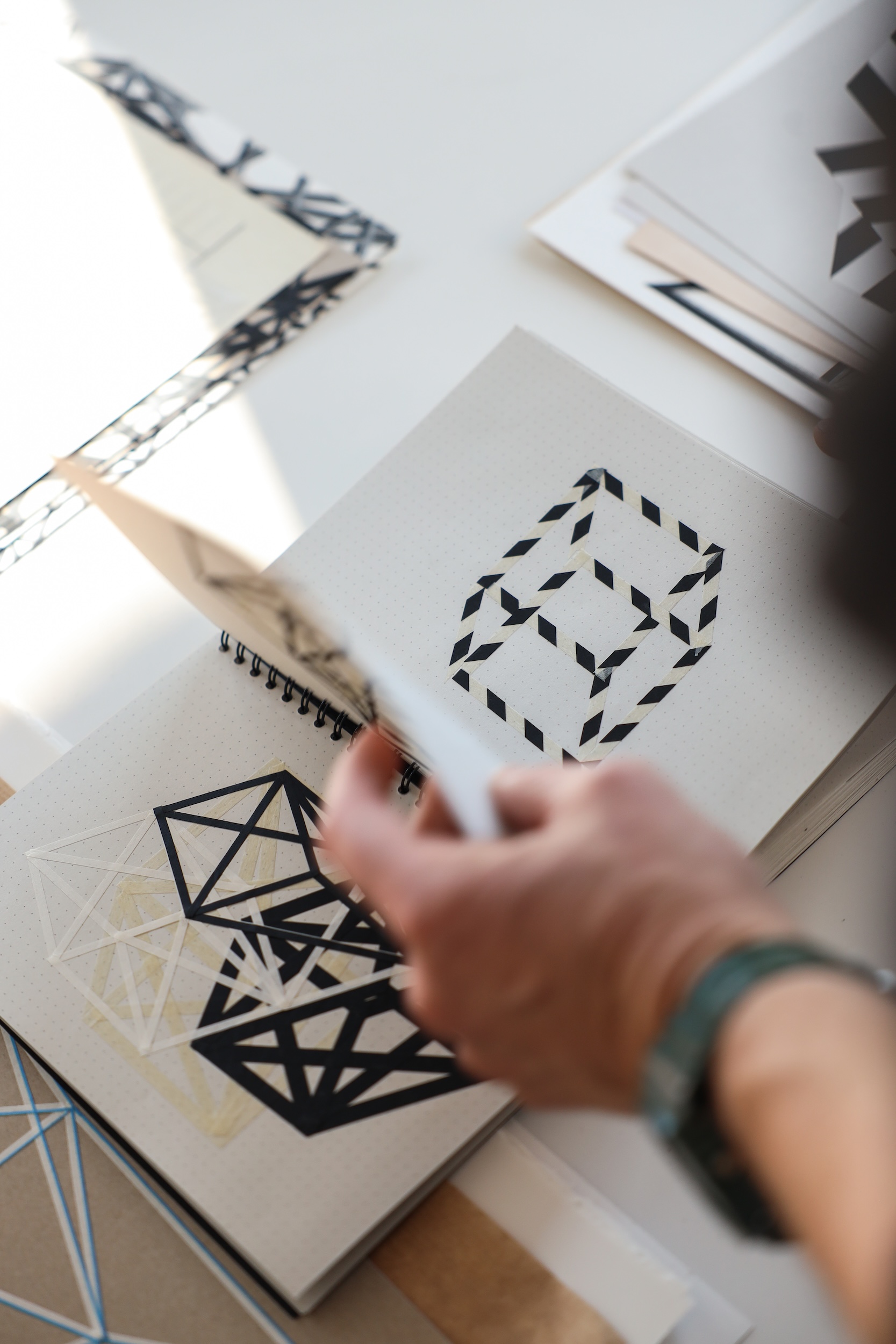
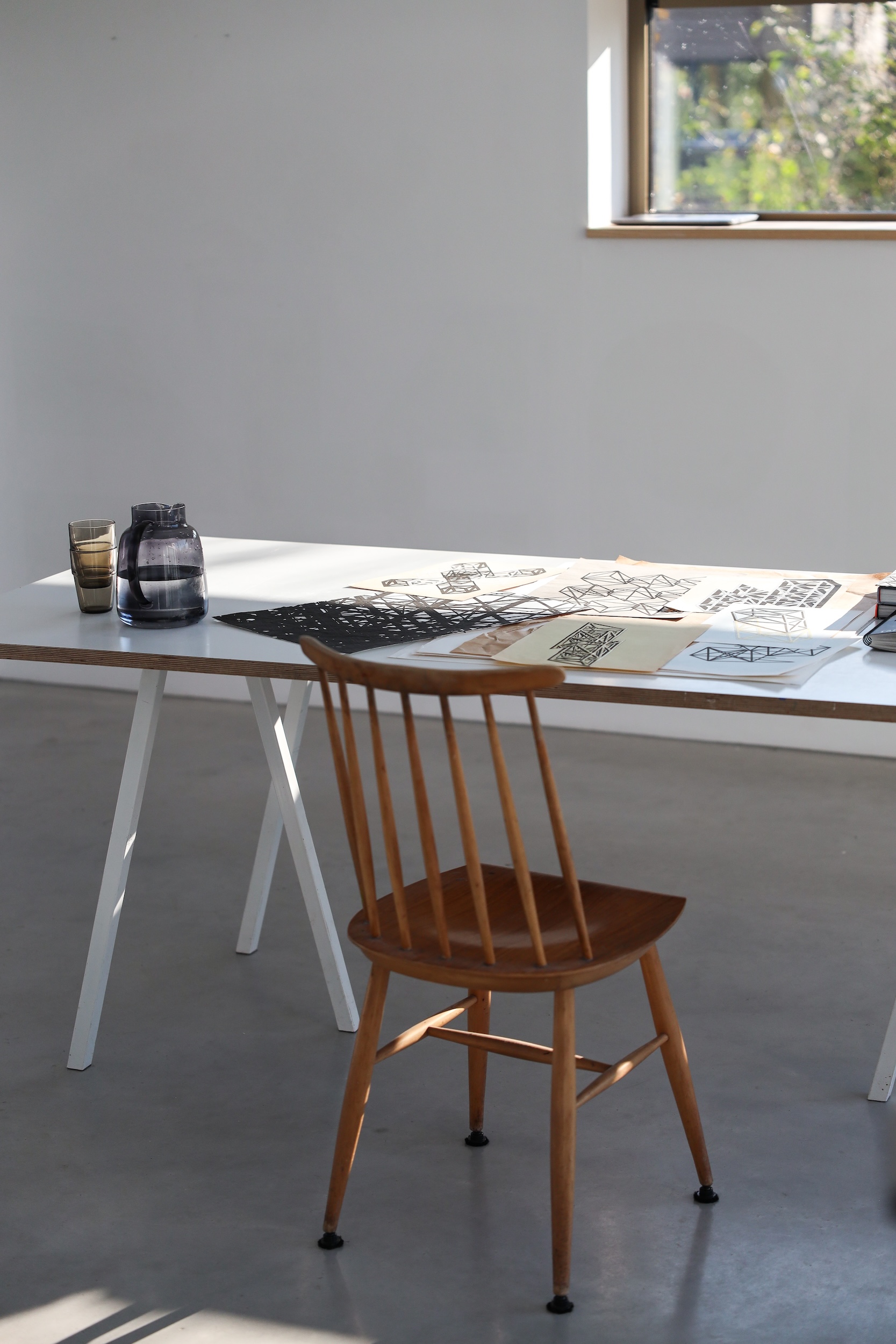
He shows me his work table, at the moment full of wood trimmings and tape ends. He tells me about his newfound obsession with tape. “I have always used tape, especially in my paintings in the past. I always used to love the way a piece looked with the tape on it, but I eventually always took it off. This time the tape is part of the finished piece. I’m having a lot of fun with it.” He flicks through sketchbook pages full of designs made from residual tape, pieces cut from larger experiments.
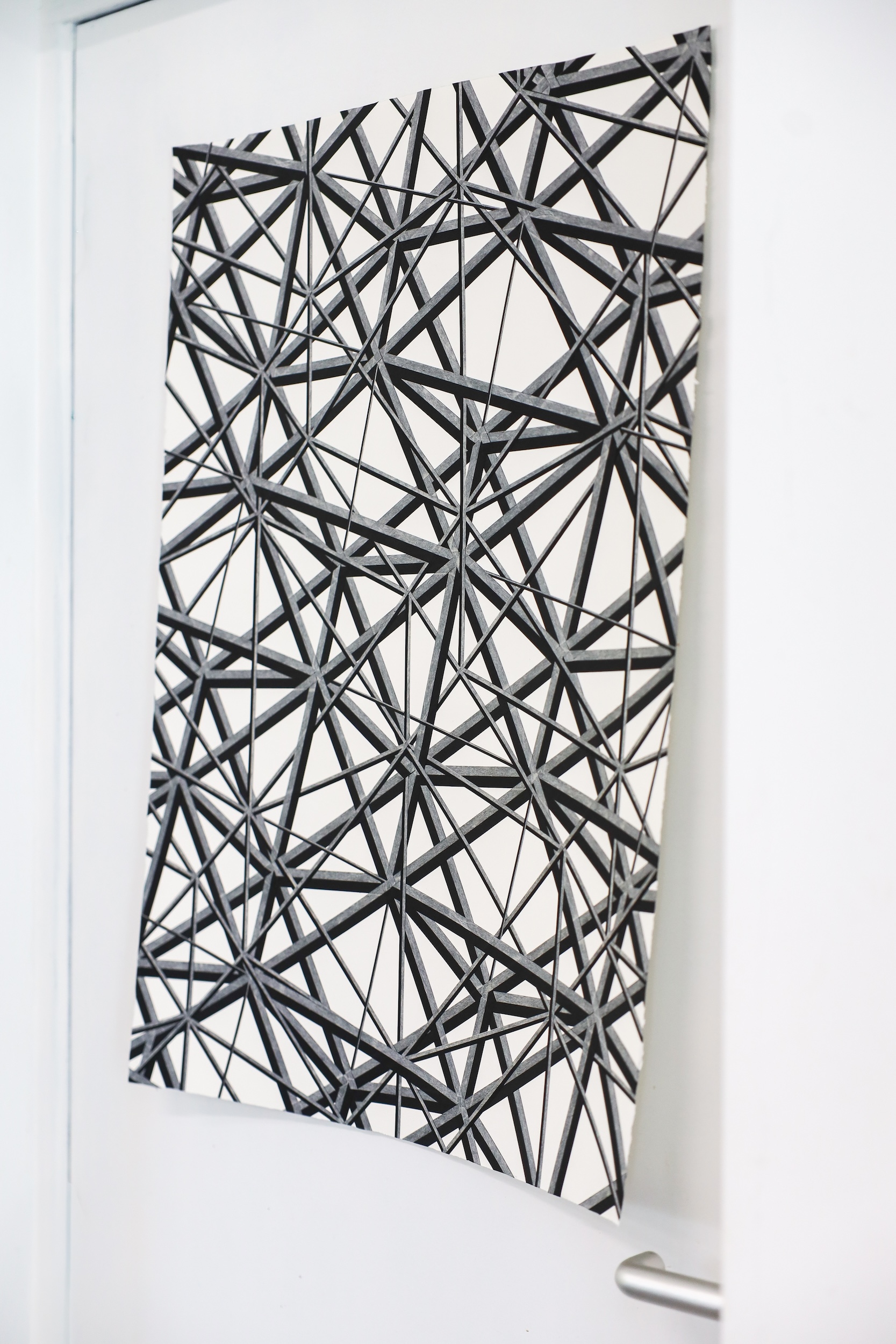
After more than 20 years of working as part of the artist duo Graphic Surgery, Zylstra is evidently still enamoured with the same subject matter that formed the duo’s signature style. The accidental beauty found in industrial structures. The uncurated aesthetics of function. The straight lines that form the geometry of the urban environment. “You would think that after all these years I would be sick of these lines. But there really is so much you can do with them. I am still fascinated.”
He tells me about a time during Lockdown where he was living next to the forest and became obsessed with saving baby trees. “I would dig them up and replant them in places where they could flourish. I thought that maybe I could make some art about this.” This would be a totally new subject matter, but the slight illegality of the act is what gave him a thrill. “I guess that’s what I also loved about graffiti when I first began: It was rebellious and beautiful at the same time.”
We talk about working alone after so many years of collaboration. He tells me that in Japan it is a common practice to use your middle name and your mother’s maiden name to create a new identity for yourself. Apparently many artists use it to distance themselves from their earlier work. Zylstra laughs when he tells me that when he tried to do the same, he discovered there was another artist with that name. “So I’m just using my real name.”
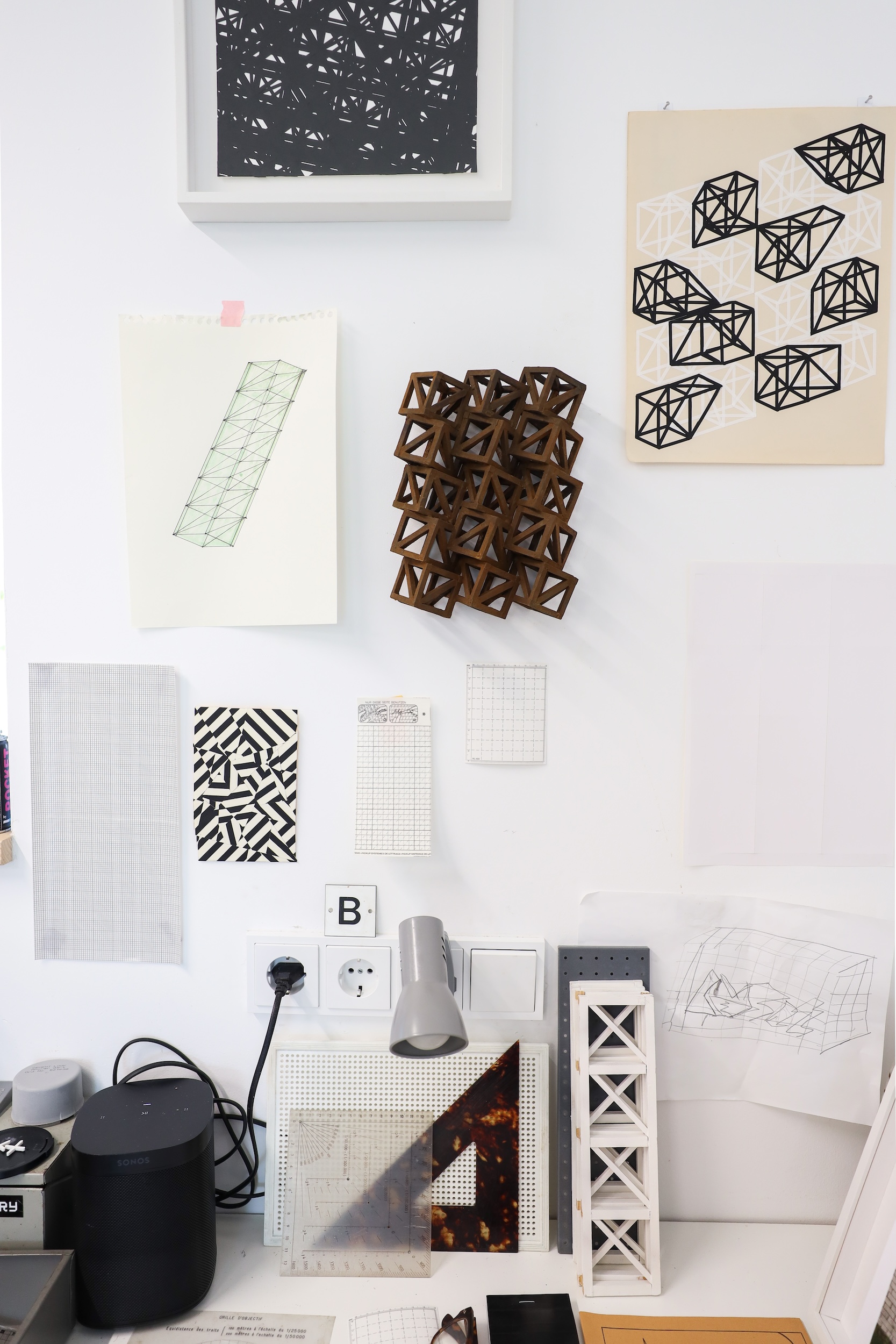
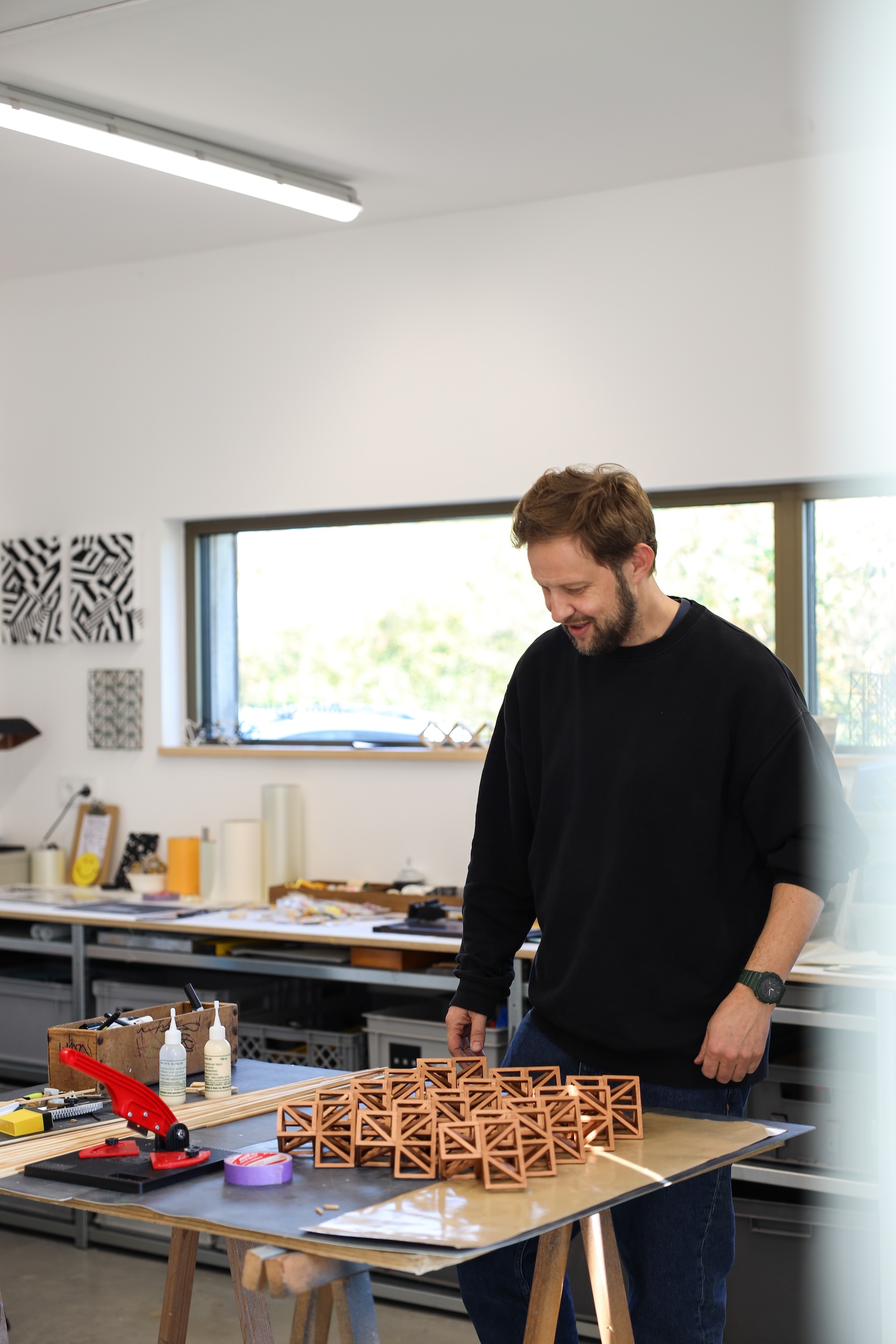
Whilst his tree-saving is yet to be artistically translated, Zylstra’s work is fluent in the deconstruction of urban industrial form. His experimentation with diverse perspectives and textures shows how this subject matter is in no danger of being exhausted. It is a goldmine of possibility and still the root of Zylstra’s discipline.
His first solo exhibition as a solo artist, Assembling Line, is set to open on January 10, 2027, from 14:00 to 16:00 at Mini Galerie, Vogelakker 49 in Almere.
Text by Alicia Hansen
Photography by Chloë Alyshea